
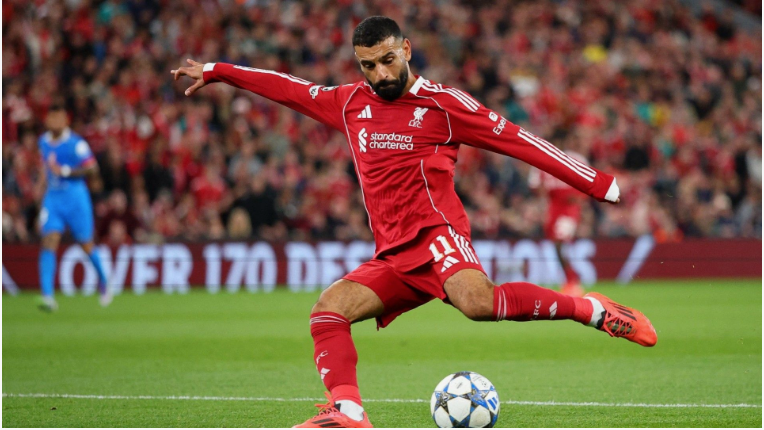
What’s your favorite goal ever scored for the club?
A favorite goal ever scored for the club transcends mere statistics—it represents a perfect fusion of technical brilliance, emotional significance, and historical importance that creates an indelible memory in the hearts of supporters.
Every football fan has that one goal permanently etched in their memory. It might be a championship-winning strike, a derby demolition, a moment of individual genius, or simply a goal witnessed at the perfect moment in life. These aren’t just goals; they’re time capsules of emotion, markers of where we were and who we were with when the ball hit the net.
In 2026, with football’s rich history spanning over a century and the Premier League alone celebrating more than three decades of memorable moments, the question “What’s your favorite goal ever scored for the club?” sparks passionate debates in pubs, social media, and living rooms across the globe. This comprehensive exploration examines what makes certain goals unforgettable, analyzes iconic strikes from football’s greatest clubs, and investigates the psychology behind why particular goals resonate so deeply with supporters.
Whether it’s Sergio Agüero’s title-winning strike, Dennis Bergkamp’s supernatural turn and finish, or Steven Gerrard’s FA Cup final thunderbolt, favorite goals tell stories far bigger than the 90 minutes in which they were scored.
What Makes a Goal Truly Unforgettable?
Legendary goals possess specific characteristics that elevate them beyond ordinary strikes, combining aesthetic beauty, dramatic context, and emotional resonance.
Analysis of fan polls, social media engagement, and football historians’ assessments reveals several common elements that transform goals from mere statistics into eternal memories:
Context and Stakes: Goals scored in crucial moments—title deciders, cup finals, relegation battles, or derby matches—carry exponentially greater weight than those in routine fixtures.
Technical Excellence: Spectacular technique, whether a thunderous long-range strike, delicate chip, or mesmerizing solo dribble, ensures goals remain visually memorable decades later.
Emotional Timing: Last-minute winners, comeback goals, or strikes that end long droughts create emotional peaks that neuroscience shows are more deeply encoded in memory.
Personal Connection: Where fans were, who they watched with, and what was happening in their lives when the goal was scored often matters as much as the goal itself.
Historical Significance: Goals that win trophies, break records, or mark turning points in club history transcend individual matches to become institutional folklore.
Understanding these elements helps explain why certain goals achieve immortality while technically similar strikes are forgotten.
Sergio Agüero vs. QPR – “AGÜEROOOOO!” (Manchester City, 2012)
Sergio Agüero’s 94th-minute title-winning goal against Queens Park Rangers represents the single most dramatic moment in Premier League history and epitomizes everything that makes a goal unforgettable.
On May 13, 2012, Manchester City needed to win their final game to claim their first Premier League title in 44 years. Trailing QPR 2-1 as the match entered injury time, City’s dreams appeared crushed. Then Edin Džeko equalized in the 92nd minute, and Agüero received the ball in the 94th minute, 20 yards from goal.
What happened next became football folklore. Agüero slalomed past one defender, held off another, and fired past Paddy Kenny into the bottom corner. Martin Tyler’s commentary—”AGÜEROOOOO! I swear you’ll never see anything like this ever again!”—became as iconic as the goal itself.
The technical execution was excellent but not extraordinary. What made this goal legendary was pure context: it won the Premier League on goal difference, denied Manchester United the title, ended City’s 44-year wait, and completed the most dramatic finish in English football history. Fourteen years later, it remains the definitive answer for most City supporters when asked their favorite goal.
The goal fundamentally altered English football’s power dynamics, launching City’s era of dominance and demonstrating that championships could be won and lost in literally the final seconds. Neurological studies on memory formation explain why fans remember exactly where they were during this moment—the extreme emotional intensity created what psychologists call a “flashbulb memory.”
Dennis Bergkamp vs. Newcastle – The Pirouette (Arsenal, 2002)
Dennis Bergkamp’s supernatural turn and finish against Newcastle United exemplifies how pure technical artistry can make a goal timeless regardless of its competitive significance.
On March 2, 2002, Arsenal faced Newcastle at St. James’ Park. In the 11th minute, Robert Pires delivered a long diagonal pass toward Bergkamp on the edge of the penalty area. What followed defied physics and belief.
Bergkamp controlled the ball with his right foot, spun 180 degrees around defender Nikos Dabizas with a single touch, and finished with his left foot—all in one fluid motion that took approximately two seconds. The goal’s technique was so sublime that it’s studied in coaching courses worldwide as an example of perfect first touch, spatial awareness, and finishing.
Unlike Agüero’s goal, Bergkamp’s strike didn’t win a trophy or decide a title race. Arsenal won the match 2-0 in a mid-season fixture. Yet Arsenal fans consistently vote it their favorite goal because it encapsulated Bergkamp’s genius—the intelligence to see space others couldn’t, the technique to execute the impossible, and the composure to finish under pressure.
The goal has been viewed millions of times on social media, featured in countless “greatest goals” compilations, and remains a touchstone for discussions about technical excellence. It proves that aesthetic beauty alone can immortalize a goal when executed with sufficient artistry.
Steven Gerrard vs. West Ham – The FA Cup Final Rocket (Liverpool, 2006)
Steven Gerrard’s 35-yard equalizer in the 2006 FA Cup Final demonstrates how a goal can embody a player’s relationship with their club and become symbolic of their entire career.
The 2006 FA Cup Final appeared lost for Liverpool. Trailing West Ham 3-2 in injury time, the Reds faced defeat. Captain Steven Gerrard received the ball 35 yards from goal, took one touch, and unleashed a thunderous strike that flew past Shaka Hislop into the top corner.
The technical difficulty was immense—striking a moving ball cleanly from that distance requires perfect timing and technique. But the goal’s significance extended far beyond technique. Gerrard, Liverpool’s local hero and captain, had dragged his team to the Champions League trophy a year earlier; now he was doing it again in the FA Cup.
Liverpool went on to win on penalties, but Gerrard’s goal was the moment that defined the final. For Liverpool supporters, it epitomized their captain’s refusal to accept defeat, his ability to produce magic when most needed, and his deep emotional connection to the club.
The goal is frequently cited as Gerrard’s finest moment in a Liverpool shirt, which is remarkable given his Champions League final heroics. This illustrates how the combination of technique, timing, and symbolism creates goals that transcend their immediate context to become career-defining moments.
Wayne Rooney vs. Manchester City – The Bicycle Kick (Manchester United, 2011)
Wayne Rooney’s acrobatic overhead kick in the Manchester derby represents the perfect synthesis of athletic difficulty, aesthetic beauty, and competitive significance.
On February 12, 2011, Manchester United hosted Manchester City in a crucial derby match. In the 78th minute, Nani’s cross from the right was slightly behind Rooney. Without hesitation, the striker launched himself into an overhead kick that flew past Joe Hart into the top corner.
The goal showcased extraordinary athleticism—the timing, technique, and courage required for a perfect bicycle kick make it one of football’s most difficult skills. The fact Rooney executed it in a Manchester derby, in front of the Stretford End, against title rivals, elevated it to legendary status.
Sir Alex Ferguson called it the best goal scored at Old Trafford in his tenure, remarkable praise from a manager who witnessed thousands of goals. United won 2-1, maintaining their title challenge. Fourteen years later, United fans overwhelmingly select it as their favorite goal, despite the club’s rich history of memorable strikes.
The goal has been analyzed frame-by-frame by coaches and biomechanics experts who marvel at the body positioning, power generation, and precision. It represents the platonic ideal of the spectacular goal—technically perfect, aesthetically beautiful, and competitively crucial.
Thierry Henry vs. Real Madrid – The Individual Masterpiece (Arsenal, 2006)
Thierry Henry’s solo goal against Real Madrid at the Bernabéu demonstrated that individual brilliance on the grandest stage creates goals that define entire eras.
On February 21, 2006, Arsenal traveled to Real Madrid’s Santiago Bernabéu for a Champions League knockout match. Already leading 1-0, Henry received the ball near the halfway line in the 47th minute and embarked on a devastating run.
Gliding past multiple defenders with seemingly effortless pace and balance, Henry entered the penalty area, shifted the ball onto his right foot, and finished precisely past Iker Casillas. The goal stunned the Bernabéu into silence and announced Arsenal as genuine Champions League contenders.
What made the goal extraordinary was the location and opposition. Scoring a solo goal at Real Madrid’s home, against defenders of the caliber of Sergio Ramos and Roberto Carlos, while Casillas guarded the goal, represented the pinnacle of individual achievement. For Arsenal fans of that generation, it symbolized the club’s peak—playing beautiful football and competing with Europe’s elite.
Although Arsenal didn’t win the Champions League that season, Henry’s goal at the Bernabéu remains a favorite because it captured the ambition and quality of Arsenal’s greatest era. It shows that sometimes a goal’s significance lies in what it represented about a club’s status rather than what it won.
The Psychology Behind Favorite Goals
Neuroscience and psychology reveal why certain goals create lasting emotional memories that strengthen bonds between fans and clubs.
Dr. Robert Hatch, a sports psychologist specializing in fan behavior, explains: “When a goal is scored in a highly emotional context, the brain releases dopamine and creates what we call an episodic memory—a vivid recollection not just of the event but of the entire experience surrounding it.”
Research from the University of Manchester’s football fan behavior lab demonstrates that favorite goals often correlate with formative experiences: first matches attended, watching with deceased relatives, or moments during significant personal life events. The goal becomes a mental bookmark for those memories.
Social bonding also plays a crucial role. Goals celebrated with friends, family, or among thousands of fellow supporters create collective memories that strengthen community identity. This explains why goals scored in stadiums often resonate more deeply than those watched on television, despite identical sporting significance.
Furthermore, the narrative structure of football matches mirrors classical dramatic storytelling—tension, conflict, climax, and resolution. Goals that provide dramatic climaxes (last-minute winners, comeback strikes) satisfy deep-seated psychological cravings for narrative resolution, making them more memorable.
Modern Goals in the Social Media Era (2020-2026)
The digital age has transformed how goals are experienced, shared, and remembered, creating new dimensions to what makes a goal “favorite-worthy.”
Goals scored in 2026 exist in a fundamentally different media landscape than those from previous decades. Instant replay from multiple angles, social media virality, and global accessibility have changed the goal-watching experience.
For example, when Arsenal’s Bukayo Saka scored a last-minute winner against Tottenham in the 2025 North London Derby, the goal was viewed over 50 million times within 24 hours across social media platforms. Fans created memes, reaction videos, and tactical analyses within minutes, creating a shared digital experience that complemented the traditional stadium and television viewing.
This democratization means younger fans often have different “favorite goals” than older supporters. A spectacular 2024 Champions League strike might resonate more with Gen Z fans than a technically similar goal from 2004, simply because they experienced it in real-time through their preferred media channels.
However, some argue this abundance diminishes individual goals’ impact. When spectacular strikes appear weekly in highlight reels and social media feeds, does any single goal maintain uniqueness? Research suggests yes—context and personal connection still matter more than technical quality alone, even in the digital era.
Club-Specific Goal Cultures
Different clubs develop distinct “goal cultures” reflecting their playing philosophies, histories, and supporter identities, influencing which types of goals become favorites.
Arsenal fans traditionally favor aesthetically beautiful, technically perfect goals reflecting their club’s historical commitment to attractive football. Dennis Bergkamp’s goals are celebrated not just for effectiveness but for artistry.
Liverpool supporters often cherish goals embodying “the Liverpool way”—passionate, dramatic, and emotionally intense. Gerrard’s strikes exemplify this culture, where heart and determination matter as much as technique.
Manchester United’s goal culture emphasizes flair, individual brilliance, and winning mentality. Rooney’s bicycle kick, Cristiano Ronaldo’s long-range rockets, and Eric Cantona’s chip against Sunderland all reflect this identity.
Manchester City fans, particularly newer supporters, celebrate goals representing the club’s transformation and tactical sophistication. Vincent Kompany’s strike against Leicester or Agüero’s title winner symbolize the modern City era.
These club-specific preferences demonstrate that favorite goals aren’t chosen in a vacuum—they’re influenced by institutional identity, playing philosophy, and the stories clubs tell about themselves.
The Role of Commentary in Goal Immortalization
Iconic commentary has the power to elevate good goals to legendary status, creating audio-visual packages that become inseparable from the goals themselves.
Martin Tyler’s “AGÜEROOOOO!” became as famous as Agüero’s goal itself. The commentary perfectly captured the moment’s dramatic intensity, and the audio-visual combination created something greater than either element alone.
Similarly, Andy Gray’s “YA BEAUTY! WHAT A HIT SON!” during Tony Yeboah’s goals in the 1990s became culturally embedded. For many fans, they can’t recall these goals without hearing Gray’s voice.
This phenomenon demonstrates how multisensory memories are stronger than single-sensory ones. The combination of visual spectacle and memorable audio commentary creates what psychologists call a “dual-coding” memory, which is more easily recalled and more emotionally resonant.
In the modern era, commentary clips go viral alongside goals, meaning the commentator’s reaction becomes part of the goal’s identity. This symbiotic relationship between action and narration shapes which goals become cultural touchstones.
International Perspectives: Favorite Goals Across Cultures
Cultural differences influence how supporters from different countries value and remember goals, reflecting varying football philosophies and aesthetic preferences.
Research comparing supporter preferences across countries reveals fascinating differences. English fans typically favor dramatic, high-stakes goals in competitive matches. Spanish supporters often prefer technically intricate goals showcasing skill. German fans value tactically intelligent goals that demonstrate team coordination.
These preferences reflect broader football cultures. In England, where physicality and competitiveness are prized, Gerrard’s powerful strikes and Roy of the Rovers moments resonate deeply. In Spain, where technical mastery is paramount, goals like Lionel Messi’s solo runs or Andrés Iniesta’s perfectly weighted finishes are celebrated.
This cultural dimension adds complexity to “favorite goal” discussions. A goal universally praised for technique might mean less to supporters whose culture values emotional intensity over aesthetic beauty, and vice versa.
The Generational Divide in Favorite Goals
Generational differences among supporters create distinct goal preferences, with formative football-watching years heavily influencing which goals resonate most deeply.
Supporters who came of age in the 1990s often cite goals from that era—Eric Cantona’s chips, Alan Shearer’s power strikes, or Ryan Giggs’s FA Cup semi-final solo effort. These goals coincided with their formative football experiences, creating powerful nostalgic connections.
Millennials who grew up in the 2000s favor the Agüero moment, Gerrard’s strikes, or Cristiano Ronaldo’s thunderbolts. Gen Z supporters, watching football in the social media age, often prefer more recent goals they experienced in real-time through digital platforms.
This isn’t simply nostalgia—it’s the psychological principle of “reminiscence bump,” where memories from adolescence and early adulthood are more vivid and emotionally significant than those from other life periods. The goals we witness between ages 15-25 disproportionately become our favorites.
Understanding this generational element explains why “favorite goal” debates often break down along age lines, with different generations championing different eras’ strikes.
Conclusion: Why Favorite Goals Matter
Favorite goals represent far more than sporting achievements—they’re deeply personal touchstones that connect individual memories to collective experiences, forming essential parts of supporter identity and football culture.
When fans discuss their favorite goals, they’re rarely just analyzing technical execution or competitive significance. They’re sharing pieces of their lives—where they were, who they loved, what mattered to them when that ball hit the net.
These goals become shorthand for entire eras of club history. Agüero’s strike means “the beginning of City’s dominance.” Gerrard’s rocket means “Liverpool’s never-say-die spirit.” Bergkamp’s turn means “Arsenal’s beautiful football era.” They’re narrative devices that help supporters understand and communicate their club’s story.
In 2026, with football more commercialized and globalized than ever, these authentic emotional connections matter enormously. Favorite goals remind us why we fell in love with football—not for financial fair play regulations or transfer market valuations, but for those transcendent moments when the ball hits the net and pure joy erupts.
Whether it’s a title-winning thunderbolt or a perfectly crafted team goal, our favorite strikes are ultimately about belonging—to a club, a community, a moment in time. They’re evidence that football, at its best, creates memories that last lifetimes and bonds that transcend the 90 minutes.