
Michael Jordan Stats, Career Achievements & NBA Legacy 2026
Quick Facts: Michael Jordan
| Category | Details |
|---|---|
| Full Name | Michael Jeffrey Jordan |
| Birth Date | February 17, 1963 |
| Birthplace | Brooklyn, New York |
| Position | Shooting Guard |
| NBA Teams | Chicago Bulls (1984-1993, 1995-1998) |
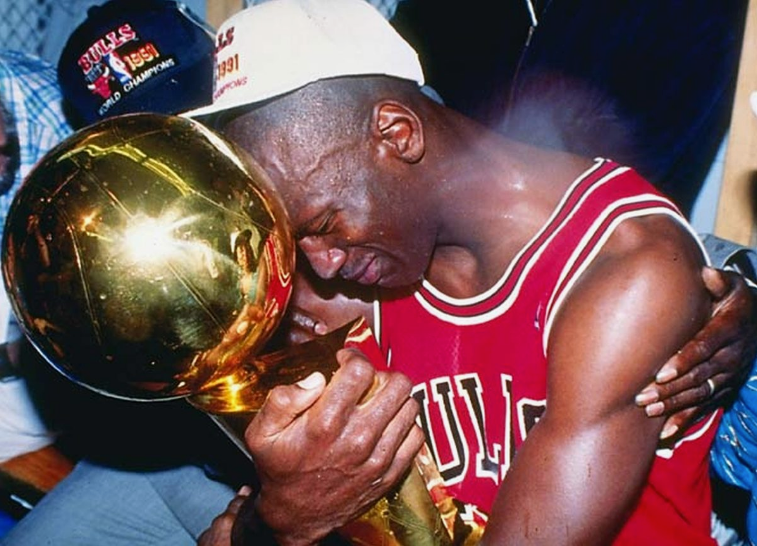
| NBA Championships | 6 (1991, 1992, 1993, 1996, 1997, 1998) |
| NBA Finals MVP | 6 (all championship years) |
| Career PPG | 30.1 (highest in NBA history) |
| Rookie Year PPG | 28.2 |
| Career High | 63 points (vs. Boston Celtics, 1986 playoffs) |
| All-Star Selections | 14 |
| Jersey Numbers | #23 (primary), #45 (1995 comeback) |
Michael Jordan is widely considered the greatest basketball player of all time, a sentiment shared by players, coaches, and fans across generations. With 6 NBA championships, 6 Finals MVP awards, and a career scoring average of 30.1 points per game, Jordan’s statistical dominance combined with his clutch performances and cultural impact created an unprecedented legacy. From his game-winning shot as a North Carolina freshman to his iconic “Flu Game” performance, Jordan’s career represents the pinnacle of basketball excellence and competitive greatness.
Michael Jordan Career Statistics: The Numbers Behind the Legend
Michael Jordan’s career statistics tell the story of sustained excellence across 15 NBA seasons. His numbers remain unmatched in their combination of scoring efficiency, championship success, and individual accolades.
Complete NBA Regular Season Statistics
| Season | Team | Games | PPG | RPG | APG | SPG | FG% |
|---|---|---|---|---|---|---|---|
| 1984-85 | Chicago Bulls | 82 | 28.2 | 6.5 | 5.9 | 2.4 | 51.5% |
| 1985-86 | Chicago Bulls | 18 | 22.7 | 3.6 | 2.9 | 2.1 | 45.7% |
| 1986-87 | Chicago Bulls | 82 | 37.1 | 5.2 | 4.6 | 2.9 | 48.2% |
| 1987-88 | Chicago Bulls | 82 | 35.0 | 5.5 | 5.9 | 3.2 | 53.5% |
| 1988-89 | Chicago Bulls | 81 | 32.5 | 8.0 | 8.0 | 2.9 | 53.8% |
| 1989-90 | Chicago Bulls | 82 | 33.6 | 6.9 | 6.3 | 2.8 | 52.6% |
| 1990-91* | Chicago Bulls | 82 | 31.5 | 6.0 | 5.5 | 2.7 | 53.9% |
| 1991-92* | Chicago Bulls | 80 | 30.1 | 6.4 | 6.1 | 2.3 | 51.9% |
| 1992-93* | Chicago Bulls | 78 | 32.6 | 6.7 | 5.5 | 2.8 | 49.5% |
| 1995-96* | Chicago Bulls | 82 | 30.4 | 6.6 | 4.3 | 2.2 | 49.5% |
| 1996-97* | Chicago Bulls | 82 | 29.6 | 5.9 | 4.3 | 1.7 | 48.6% |
| 1997-98* | Chicago Bulls | 82 | 28.7 | 5.8 | 3.5 | 1.7 | 46.5% |
*Championship seasons
Michael Jordan Playoff Career Statistics
| Category | Total/Average | NBA Rank |
|---|---|---|
| Playoff Games | 179 | – |
| Playoff PPG | 33.4 | 1st all-time |
| Total Playoff Points | 5,987 | 4th all-time |
| 50+ Point Playoff Games | 8 | 2nd all-time |
| 40+ Point Playoff Games | 38 | 1st all-time |
| Playoff Triple-Doubles | 6 | – |
| Game-Winners (Playoffs) | Multiple iconic shots | – |
Major Individual Achievements
✅ 6× NBA Champion (1991, 1992, 1993, 1996, 1997, 1998)
✅ 6× NBA Finals MVP (every championship year)
✅ 5× NBA Most Valuable Player (1988, 1991, 1992, 1996, 1998)
✅ 10× NBA Scoring Champion (1987-1993, 1996-1998)
✅ 14× NBA All-Star
✅ NBA Rookie of the Year (1985)
✅ NBA Defensive Player of the Year (1988)
✅ 9× NBA All-Defensive First Team
✅ 2× Olympic Gold Medalist (1984, 1992)
✅ NCAA National Champion (1982)
✅ Naismith College Player of the Year (1984)
The $500,000 Nike Deal That Changed Sports Marketing Forever
In 1984, Nike offered Michael Jordan a groundbreaking 5-year contract worth $500,000 annually plus royalties, a deal that revolutionized athlete endorsements and created the modern sneaker industry. At the time, Nike was primarily known for running shoes and was struggling to compete in the basketball market.
The Air Jordan Business Impact
| Year | Milestone | Revenue/Impact |
|---|---|---|
| 1984 | Initial Nike Deal | $500,000/year + royalties |
| 1985 | Air Jordan 1 Launch | $126 million first year sales |
| 1990s | Peak Bulls Era | Billions in annual revenue |
| 2020 | Jordan Brand Revenue | $4.7 billion annually |
| 2024 | Estimated Lifetime Earnings | $2+ billion from Nike |
What made the Nike-Jordan partnership revolutionary:
- Creative control: Jordan received unprecedented input on shoe design
- Signature line: First athlete with dedicated sub-brand (Air Jordan)
- Royalty structure: Percentage of sales rather than flat endorsement fee
- Marketing innovation: “Be Like Mike” and iconic commercials created athlete branding template
- Cultural impact: Sneakers became fashion statements beyond sports equipment
Nike co-founder Phil Knight and marketing executive Sonny Vaccaro saw Jordan’s potential beyond basketball. They convinced him to choose Nike over Adidas and Converse by offering something unprecedented: his own signature line with creative control.
The Air Jordan brand transformed the stadium atmosphere in Chicago. Before Jordan, the Bulls played in arenas that were two-thirds empty. After his arrival and the marketing machine behind him, every game became a sellout.
What Makes Michael Jordan the Greatest Basketball Player Ever?
Michael Jordan’s GOAT status transcends statistics. His combination of physical gifts, mental toughness, competitive drive, and clutch performance created a player who dominated like no one before or since.
The Jordan Competitive Edge
Legendary practice intensity: Jordan treated every practice session like a championship game. Teammates consistently reported that he played practice “like it was the last thing on earth,” making actual games easier by comparison.
Clutch gene: Jordan’s ability to deliver in critical moments became his defining characteristic:
- 1982 NCAA Championship: Game-winning shot against Georgetown as a freshman
- 1989 “The Shot”: Series-winning buzzer-beater against Cleveland
- 1997 “Flu Game”: 38 points while severely ill
- 1998 Finals Game 6: Steal from Malone, game-winning shot over Russell
Physical capabilities:
- Elite athleticism with iconic free-throw line dunk
- Defensive excellence (NBA Defensive Player of the Year 1988)
- 9× All-Defensive First Team selections
- Ability to score from anywhere on the court
- Trademark tongue-out expression (inherited from watching his father work)
Jordan vs. Other NBA Legends Comparison
| Player | Championships | Finals MVPs | Career PPG | MVP Awards |
|---|---|---|---|---|
| Michael Jordan | 6 | 6 | 30.1 | 5 |
| LeBron James | 4 | 4 | 27.2 | 4 |
| Kobe Bryant | 5 | 2 | 25.0 | 1 |
| Magic Johnson | 5 | 3 | 19.5 | 3 |
| Larry Bird | 3 | 2 | 24.3 | 3 |
| Tim Duncan | 5 | 3 | 19.0 | 2 |
What separated Jordan from his peers:
- Perfect Finals record: 6-0 in NBA Finals with 6 Finals MVP awards
- Scoring titles during championships: Only player to lead league in scoring while winning championship (7 times)
- Two three-peats: Only second franchise in NBA history to achieve this feat
- Highest playoff scoring average: 33.4 PPG remains untouchable
- Cultural transcendence: Became global icon beyond sports
Larry Bird’s famous quote after Jordan’s 63-point playoff performance in 1986 captured the sentiment: “That’s not Michael Jordan. That’s God disguised as Michael Jordan.”
Michael Jordan Career Timeline: From Brooklyn to Basketball Immortality
Early Life and Foundation (1963-1981)
Born February 17, 1963, in Brooklyn, New York, Michael Jeffrey Jordan moved to Wilmington, North Carolina, where his competitive nature was forged in a family environment that valued achievement.
The “cut from varsity” story became legendary: As a sophomore, Jordan didn’t make the varsity team. Rather than quit, he spent the summer in intense training, transforming rejection into motivation. “Maybe it’s my fault that you didn’t see that failure gave me strength, that my pain was my motivation,” Jordan later reflected.
1981 McDonald’s All-American Game: Jordan showcased his elite high school talent on the national stage, earning recognition as one of the nation’s top prospects. He was rated the #1 high school player in the nation his senior year at Laney High School.
University of North Carolina (1981-1984)
Jordan chose UNC Chapel Hill to play under legendary coach Dean Smith, a decision that shaped both his career and college basketball history.
March 29, 1982 – NCAA Championship Game: With 32 seconds remaining and UNC trailing Georgetown by one point, freshman Michael Jordan hit the game-winning jumper. “That’s the day that my name went from Mike Jordan to Michael Jordan,” he recalled. The shot announced his arrival on the national stage.
College achievements:
- ✅ NCAA National Champion (1982)
- ✅ Naismith College Player of the Year (1984)
- ✅ 1984 Olympic Gold Medal (Los Angeles)
- ✅ Consensus First-Team All-American (1983, 1984)
Coach Dean Smith on Jordan: “When he first came to us, he was one of the most confident freshmen I’ve ever seen. Two days later, he came back and said, ‘I want to talk to you. I’m going to show you nobody will ever outwork me.’ And nobody ever has to this day.”
NBA Draft and Rookie Sensation (1984-1985)
June 19, 1984: The Chicago Bulls selected Jordan with the 3rd overall pick, behind Hakeem Olajuwon and Sam Bowie. This draft position would become one of basketball’s great “what-if” stories for Portland.
Rookie season dominance:
- 28.2 points per game (3rd in NBA)
- NBA Rookie of the Year
- NBA All-Star starter
- Transformed Bulls from lottery team to playoff contender
- Stadium went from two-thirds empty to sold out every game
Jordan’s impact was immediate and electric. His combination of athleticism, scoring ability, and competitive fire brought a new energy to Chicago basketball.
The Scoring Machine Era (1986-1990)
April 20, 1986 – The 63-Point Game: Despite a broken foot that cost him 64 games that season, Jordan returned for the playoffs and scored 63 points against the Boston Celtics, still the NBA playoff record for points in a single game. The Celtics won in double overtime, but Jordan’s performance became legendary.
1986-87 Season: Jordan averaged 37.1 points per game, the highest scoring average since Wilt Chamberlain, cementing his status as the league’s premier offensive force.
The Detroit Pistons obstacle: From 1988-1990, Jordan and the Bulls repeatedly fell to the “Bad Boys” Detroit Pistons in the playoffs. The Pistons employed the infamous “Jordan Rules” – physical, aggressive defensive schemes designed specifically to stop Jordan.
These playoff defeats became the crucible that forged Jordan’s championship mentality. “We would break down mentally and become individuals, which is the way they want you to be,” Jordan explained about the early Pistons losses.
The First Three-Peat Dynasty (1990-1993)
1991: Breaking Through
May 27, 1991: The Bulls swept the Pistons 4-0 in the Eastern Conference Finals, ending Detroit’s dominance and beginning Chicago’s dynasty. The Pistons famously walked off the court with time remaining, refusing to congratulate the Bulls.
June 12, 1991: Chicago defeated the Lakers 4-1 in the NBA Finals, securing the franchise’s first championship. Jordan averaged 31.2 points per Finals game, earning his first Finals MVP.
“For the city of Chicago, for the organization, this is a big step for us,” Jordan said after eliminating Detroit. The championship validated years of playoff heartbreak.
1992: Back-to-Back Champions
The Bulls faced the Portland Trail Blazers in the Finals. Jordan’s famous “shrug game” in Game 1 – where he hit six three-pointers in the first half and shrugged to the broadcast table – became an iconic moment.
Championship #2 marked the Bulls as a legitimate dynasty, not a one-year wonder. Jordan’s partnership with Scottie Pippen evolved into arguably the greatest duo in NBA history.
1993: The First Three-Peat
Against Charles Barkley’s Phoenix Suns, Jordan delivered one of the Finals’ greatest individual performances:
- Game 4: 55 points
- Game 5: 44 points
- Game 6: 42 points
June 20, 1993: The Bulls completed the three-peat with 4-2 series victory, joining the Celtics and Lakers as the only franchises to win three consecutive championships.
Tragedy and Baseball (1993-1995)
July 23, 1993: Jordan’s father, James Jordan, was murdered during a roadside robbery. The tragedy devastated Michael, who had maintained an exceptionally close relationship with his father.
October 6, 1993: At age 30 and the peak of his powers, Jordan retired from basketball. “When I lose the sense of motivation and the sense of to prove something as a basketball player, it’s time for me to move away from the game,” he announced.
Jordan pursued professional baseball – his late father’s dream for him. He played 127 games for the Birmingham Barons (Chicago White Sox minor league affiliate), batting .202 with 3 home runs, 51 RBIs, and 30 stolen bases.
March 18, 1995: Jordan announced his return to basketball with a two-word press release: “I’m back.”
The Comeback and Second Three-Peat (1995-1998)
1995: Return Season
Jordan returned wearing #45 (his high school number) but later switched back to #23 despite NBA prohibition. The Bulls went 13-4 in their final 17 games with Jordan back, but lost to the Orlando Magic in the playoffs.
“I didn’t have enough time to get my body back to a basketball body,” Jordan admitted after the playoff loss, a rare moment of vulnerability.
1995-96: The 72-Win Season
The Bulls added controversial power forward Dennis Rodman, completing their championship core. The team achieved the greatest regular season in NBA history: 72-10 record (since broken by 2015-16 Warriors).
June 16, 1996 – Father’s Day Championship: Three years after his father’s murder, Jordan won championship #4 on Father’s Day, collapsing on the locker room floor in an emotional moment captured by cameras worldwide.
“I know he’s watching,” Jordan said through tears, clutching the basketball.
The Bulls defeated the Seattle SuperSonics 4-2, with Jordan averaging 27.3 points and earning his 4th Finals MVP.
1996-97: The Flu Game
Against the Utah Jazz in the Finals, Game 5 became legendary. Jordan suffered from severe food poisoning (allegedly from bad pizza delivery the night before).
“I wake up about 2:30, throwing up left and right,” Jordan recalled. Despite being visibly ill – needing ice bags during timeouts and Pippen’s physical support – Jordan scored 38 points in the Bulls’ 90-88 victory.
“I didn’t want to give up, no matter how sick I was, how tired I was, how low on energy I was. I felt an obligation to my team, to the city of Chicago, to go out and give that extra effort,” Jordan explained.
The Bulls won the series 4-2, securing championship #5.
1997-98: The Last Dance
At age 35, Jordan led the league in scoring again (28.7 PPG) while knowing it was likely his final season. Coach Phil Jackson had been informed it would be his last year, and Pippen’s contract disputes created uncertainty.
Game 7 vs. Indiana Pacers (Eastern Conference Finals): Jordan scored 28 points, leading the Bulls past their toughest challenge to reach the Finals.
June 14, 1998 – The Final Shot: With the Bulls trailing the Utah Jazz by one point and 41.9 seconds remaining in Game 6, Jordan created one of basketball’s most iconic sequences:
- Defensive play: Stole the ball from Karl Malone
- Crossover: Dribbled down court, crossed over Bryon Russell
- Game-winner: Hit the championship-winning jumper with 5.2 seconds left
- Final championship: Bulls won 87-86, securing their 6th title in 8 years
The shot, Jordan’s follow-through pose, and Russell falling became frozen in basketball immortality.
Jordan’s final championship statistics:
- 6 championships in 6 Finals appearances
- 6 Finals MVP awards (only player to accomplish this)
- Never allowed a Game 7 in the Finals
- Second three-peat completed
Breaking Down the Chicago Bulls Dynasty: How Jordan Built a Winner
The Chicago Bulls transformation from struggling franchise to dynasty required more than just Jordan’s individual brilliance. It demanded the right supporting cast, coaching, and organizational commitment.
The Triangle Offense System
Coach Phil Jackson implemented the triangle offense in 1989, a system that:
- Maximized Jordan and Pippen’s versatility
- Created spacing for Jordan’s one-on-one dominance
- Involved all five players in offensive flow
- Allowed Jordan to trust teammates in crucial moments
“Phil’s idea was to take advantage of Michael and Pippen, who just fly around like sleek Dobermans,” describing the system’s athleticism requirements.
The Jordan-Pippen Partnership
Scottie Pippen evolved into Jordan’s perfect complement:
- Elite defender who could guard multiple positions
- Playmaker who facilitated when Jordan drew double teams
- Scorer who could carry offensive load when needed
- Basketball IQ that matched Jordan’s
Jordan on Pippen: “Some nights I’m not going to have it. I’ll help you out if you don’t have it. We’ll tag team this thing together.”
Together, they became the greatest duo to ever play the game, combining for championships in a way no other partnership has matched.
The Dennis Rodman Addition
The controversial 1995 signing of Dennis Rodman proved transformational:
- Rebounding: Led NBA in rebounds per game
- Defense: Shut down opposing power forwards
- Mental warfare: Disrupted opponents’ focus
- Toughness: Replaced physicality lost when Horace Grant left
“The Bulls missed that power forward, that rebounder, that defensive presence with the loss of Horace Grant,” explaining Rodman’s importance.
Bulls Championship Roster Evolution
| Position | First Three-Peat (1991-93) | Second Three-Peat (1996-98) |
|---|---|---|
| Point Guard | John Paxson, B.J. Armstrong | Ron Harper, Steve Kerr |
| Shooting Guard | Michael Jordan | Michael Jordan |
| Small Forward | Scottie Pippen | Scottie Pippen |
| Power Forward | Horace Grant | Dennis Rodman |
| Center | Bill Cartwright | Luc Longley |
| Sixth Man | Toni Kukoč | Toni Kukoč |
Championship Team Statistics Comparison
| Season | Regular Season Record | Playoff Record | Finals Opponent | Series Result |
|---|---|---|---|---|
| 1990-91 | 61-21 | 15-2 | Lakers | 4-1 |
| 1991-92 | 67-15 | 15-7 | Trail Blazers | 4-2 |
| 1992-93 | 57-25 | 15-4 | Suns | 4-2 |
| 1995-96 | 72-10 | 15-3 | SuperSonics | 4-2 |
| 1996-97 | 69-13 | 15-4 | Jazz | 4-2 |
| 1997-98 | 62-20 | 15-6 | Jazz | 4-2 |
The Atlantic City Gambling Controversy: Media Scrutiny at Its Peak
During the 1993 Eastern Conference Finals against the New York Knicks, Michael Jordan became embroiled in controversy when he was spotted gambling in Atlantic City on the night before a playoff game.
The incident timeline:
- Thursday night: Jordan visited Atlantic City casino
- Friday: Media broke the story during playoff series
- Response: Jordan defended his right to privacy
“It’s attacked in my private life and I really didn’t like it. I don’t agree with it,” Jordan responded to media questions.
Teammates and coaches defended his professionalism: “That’s his business and it shouldn’t be publicized. He still came to play and that’s all that we’re concerned about.”
The controversy highlighted the intense media scrutiny Jordan faced as the world’s most famous athlete. Despite the distraction, the Bulls defeated the Knicks and went on to win their third consecutive championship.
Key perspective: Jordan’s competitive nature extended beyond basketball. His gambling represented his need for competitive outlets, not a character flaw. “My competitive nature went right into the pros,” Jordan explained about how competition drove every aspect of his life.
Michael Jordan’s Defensive Excellence: The Complete Two-Way Player
While Jordan’s offensive exploits dominate highlight reels, his defensive prowess made him basketball’s most complete player.
Defensive Accolades and Statistics
Individual defensive awards:
- ✅ NBA Defensive Player of the Year (1988)
- ✅ 9× NBA All-Defensive First Team
- ✅ 3× NBA Steals Leader (1988, 1990, 1993)
Career defensive statistics:
- 2.3 steals per game (career average)
- 3.2 steals per game (1987-88 season high)
- 2,514 career steals (3rd all-time when he retired)
- 893 career blocks (as a 6’6″ guard)
The Defensive Mentality
Jordan applied the same competitive intensity to defense as offense. Opponents feared his ability to take over games defensively:
- Gambling for steals in passing lanes
- Locking down opposing scorers in crucial moments
- Blocking shots despite giving up height to forwards
- Leading fast breaks off defensive rebounds
The 1998 Finals steal from Karl Malone exemplified his defensive impact. With the championship on the line, Jordan anticipated the entry pass, stole the ball, and immediately converted it into the game-winning shot.
“What a defensive play by Michael Jordan,” the broadcast call emphasized, recognizing that defense initiated the championship sequence.
How Michael Jordan’s Signature Moves Became Unstoppable
Jordan developed an offensive arsenal that defenders knew was coming but couldn’t stop.
The Jordan Offensive Package
The Fadeaway Jumper:
- Created separation using shoulder and footwork
- Nearly impossible to block due to release height
- Perfected through thousands of practice repetitions
- Most effective in mid-range (15-20 feet)
The Tongue:
- Trademark expression during concentration
- Inherited from watching his father work on projects
- Became instantly recognizable Jordan signature
- His grandfather originated the habit in the family
The Free-Throw Line Dunk:
- Showcased in 1988 Slam Dunk Contest
- Demonstrated elite athleticism
- Became iconic Jordan image (Jumpman logo)
- “Man was not meant to fly. Air Jordan”
The Post Game:
- Developed later in career as athleticism declined
- Used against smaller guards
- Combined footwork with fadeaway
- Extended career effectiveness into mid-30s
The Crossover:
- Most famous example: 1998 Finals over Bryon Russell
- Combined with elite first step
- Set up drives or jump shots
- Kept defenders off-balance
Scoring Evolution by Career Phase
| Career Phase | Primary Weapons | Scoring Average |
|---|---|---|
| Early Career (1985-1988) | Athleticism, drives, dunks | 32.6 PPG |
| Pre-Championship (1989-1990) | All-around scoring, defense | 33.0 PPG |
| First Three-Peat (1991-1993) | Efficient scoring, team play | 31.4 PPG |
| Second Three-Peat (1996-1998) | Post-ups, fadeaways, experience | 29.6 PPG |
The “I’m Back” Comeback: How Jordan Returned from Baseball
Jordan’s 1995 return from baseball retirement created unprecedented media frenzy and commercial impact.
The Return Timeline
March 1995: Jordan had been playing minor league baseball for the Chicago White Sox organization when the baseball strike created labor uncertainty.
March 18, 1995: Jordan released a two-word press release: “I’m back”, creating instant global headlines.
March 19, 1995: Jordan played his first game back, wearing #45 (his high school number) instead of his retired #23.
“I felt like 45 wasn’t natural. I wanted to go back to a feeling I had with 23,” Jordan explained when he later switched back despite NBA prohibition.
Immediate Impact
Regular season return statistics:
- First game: 19 points vs. Indiana Pacers
- Fifth game: 55 points at Madison Square Garden
- Bulls record with Jordan: 13-4 in final 17 games
- Playoff appearance secured
Commercial and cultural impact:
- Bulls tickets sold out immediately
- Television ratings skyrocketed
- “I’m Back” became marketing phenomenon
- Nike built entire campaign around return
The 1995 Playoff Lesson
The Bulls lost to the Orlando Magic in the Eastern Conference Semifinals, teaching Jordan humility:
“I didn’t have enough time to get my body back to a basketball body. Does Jordan have the legs to last throughout the playoffs? You’re looking at an exhausted Michael Jordan.”
The defeat motivated the historic 72-10 season that followed, as Jordan dedicated himself to returning to championship form.
The 72-10 Season: Greatest NBA Team Performance Ever
The 1995-96 Chicago Bulls achieved the best regular season record in NBA history, a mark that stood for 20 years.
Historic Season Statistics
| Category | 1995-96 Bulls | NBA Record |
|---|---|---|
| Regular Season Record | 72-10 (.878) | Best until 2015-16 Warriors (73-9) |
| Home Record | 39-2 | – |
| Road Record | 33-9 | – |
| Point Differential | +12.2 per game | – |
| Longest Win Streak | 13 games | – |
| Playoff Record | 15-3 | – |
The Complete 72-Win Team
Starting lineup:
- PG: Ron Harper – Defensive stopper
- SG: Michael Jordan – 30.4 PPG, league MVP
- SF: Scottie Pippen – 19.4 PPG, All-Star
- PF: Dennis Rodman – 14.9 RPG, league leader
- C: Luc Longley – Steady presence
Key reserves:
- Toni Kukoč – Sixth Man contributor
- Steve Kerr – Three-point specialist (later won championship as Warriors coach)
- Bill Wennington – Backup center
What Made the Team Unbeatable
Offensive excellence:
- 105.2 points per game (2nd in NBA)
- Multiple scoring options beyond Jordan
- Triangle offense in full maturity
- Best spacing and ball movement of Jordan era
Defensive dominance:
- 92.9 points allowed (1st in NBA)
- Pippen and Jordan as elite perimeter defenders
- Rodman’s rebounding (league-leading 14.9 RPG)
- Team defensive schemes perfected over years
Championship mentality:
- Jordan’s motivation after 1995 playoff loss
- Veteran leadership throughout roster
- Phil Jackson’s coaching at peak
- “This was our opportunity to go for it again”
The Bulls completed the season with championship #4, defeating Seattle 4-2 in the Finals on Father’s Day, adding emotional significance to the historic achievement.
Frequently Asked Questions About Michael Jordan
How many championships did Michael Jordan win?
Michael Jordan won 6 NBA championships, all with the Chicago Bulls in two separate three-peat runs (1991-1993 and 1996-1998). Jordan is the only player in NBA history to win 6 championships and 6 Finals MVP awards. He never lost an NBA Finals series, finishing with a perfect 6-0 record in championship rounds. Each championship featured Jordan as the undisputed best player, averaging over 30 points per game in multiple Finals series.
What was Michael Jordan’s highest scoring game?
Michael Jordan’s career-high was 69 points against the Cleveland Cavaliers on March 28, 1990. However, his most famous scoring performance came in the 1986 playoffs when he scored 63 points against the Boston Celtics, which remains the NBA playoff record for points in a single game. Despite the Bulls losing in double overtime, Larry Bird famously said afterward: “That’s not Michael Jordan. That’s God disguised as Michael Jordan.”
How much money did Michael Jordan make from Nike?
Michael Jordan’s original Nike contract in 1984 was worth $500,000 per year for 5 years plus royalties. This deal revolutionized athlete endorsements by giving Jordan a percentage of sales rather than just a flat fee. By 2024, Jordan has earned an estimated $2+ billion from Nike over his lifetime. The Jordan Brand subsidiary generates approximately $4.7 billion in annual revenue, with Jordan receiving royalties on every sale. His Nike partnership remains the most lucrative athlete endorsement deal in sports history.
Why is Michael Jordan called the GOAT?
Michael Jordan is called the GOAT (Greatest Of All Time) because of his unmatched combination of individual excellence, team success, and cultural impact. His resume includes 6 championships, 6 Finals MVPs, 5 regular season MVPs, 10 scoring titles, and the highest career scoring average (30.1 PPG) in NBA history. Jordan never lost an NBA Finals series, delivered in the most clutch moments, and transformed basketball into a global phenomenon. Players, coaches, and fans across generations consistently rank him as the greatest player ever, with his competitive drive and winning mentality setting him apart from all other candidates.
Did Michael Jordan really get cut from his high school team?
Yes, Michael Jordan was cut from the varsity basketball team at Laney High School in Wilmington, North Carolina, as a sophomore. However, the story requires context: Jordan didn’t make the varsity squad as a 5’10” sophomore but played on the junior varsity team instead. The rejection fueled his competitive fire, leading to a summer of intense training. By his junior year, he made varsity and became a star. As a senior, he was rated the #1 high school player in the nation and played in the McDonald’s All-American Game. Jordan later said: “Maybe it’s my fault that you didn’t see that failure gave me strength, that my pain was my motivation.”
What was Michael Jordan’s vertical jump?
Michael Jordan’s maximum vertical leap was measured at 48 inches during his prime, though some sources report it as 46 inches. His standing vertical (jumping without a running start) was approximately 36 inches. This extraordinary athleticism enabled his iconic free-throw line dunk in the 1988 Slam Dunk Contest and his ability to seemingly hang in the air longer than opponents. Jordan’s vertical leap, combined with his 6’6″ height and enormous hands, created his signature ability to finish acrobatic layups and dunks while absorbing contact.
How many points did Michael Jordan score in his career?
Michael Jordan scored 32,292 points in the regular season and 5,987 points in the playoffs, for a combined total of 38,279 points throughout his NBA career. His career scoring average of 30.1 points per game is the highest in NBA history, ahead of Wilt Chamberlain (30.07) and other legends. Jordan led the NBA in scoring for 10 seasons, including seven consecutive years from 1987-1993. He scored 50 or more points 39 times in regular season games and 8 times in playoff games.
What was the Flu Game?
The “Flu Game” occurred on June 11, 1997, during Game 5 of the NBA Finals between the Chicago Bulls and Utah Jazz. Jordan suffered from severe food poisoning (allegedly from bad pizza delivery the night before) and was visibly ill throughout the game, requiring ice packs during timeouts and Scottie Pippen’s physical support to stay upright. Despite his condition, Jordan scored 38 points, grabbed 7 rebounds, and hit the game-winning three-pointer in the Bulls’ 90-88 victory. The performance exemplified Jordan’s competitive will and has become one of basketball’s most legendary individual efforts. Jordan later said: “I didn’t want to give up, no matter how sick I was. I felt an obligation to my team, to the city of Chicago.”
How tall is Michael Jordan?
Michael Jordan is 6 feet 6 inches tall (1.98 meters). This height was ideal for a shooting guard, giving him advantages against smaller guards on offense while maintaining the quickness to defend the perimeter. Jordan’s height, combined with his 48-inch vertical leap, enormous hands (measured at 11.375 inches from thumb to pinky), and long wingspan, created matchup nightmares for opponents. He could post up smaller guards, shoot over most defenders, and finish above the rim with authority.
When did Michael Jordan retire?
Michael Jordan retired three times from professional basketball:
- October 6, 1993 (First retirement): Jordan retired at age 30 after winning three consecutive championships, citing loss of motivation following his father’s murder. He pursued minor league baseball for nearly two years.
- January 13, 1999 (Second retirement): After winning his sixth championship and completing the second three-peat, the 35-year-old Jordan retired again, believing it was time to step away for good.
- April 16, 2003 (Final retirement): After coming out of retirement to play two seasons with the Washington Wizards (2001-2003), Jordan retired for the final time at age 40.
His most iconic retirement was the second one in 1999, following “The Last Shot” that won the Bulls their sixth championship.
What made Michael Jordan so good at basketball?
Michael Jordan’s greatness stemmed from a unique combination of physical gifts, mental toughness, and relentless work ethic:
Physical attributes:
- Elite athleticism (48-inch vertical leap)
- Large hands that could palm the basketball
- Quick first step and explosive speed
- Strength to absorb contact and finish
Mental qualities:
- Unmatched competitive drive (“I’ve failed over and over again in my life, and that is why I succeed”)
- Clutch performance in critical moments
- Ability to elevate in playoffs (33.4 playoff PPG)
- Mental warfare against opponents
Skill development:
- Worked harder than anyone in practice
- Developed complete offensive game (drives, mid-range, post-ups, defense)
- Improved weaknesses (three-point shooting, playmaking)
- Perfected signature moves through repetition
Leadership:
- Led by example with intensity
- Demanded excellence from teammates
- Made teammates better players
- Created winning culture
Coach Dean Smith said: “He told me he wanted to be the best player ever at North Carolina. Nobody ever outworked me. And nobody ever has to this day.”
How does Michael Jordan compare to LeBron James?
The Michael Jordan vs. LeBron James GOAT debate represents basketball’s most discussed comparison:
Championships and Finals:
- Jordan: 6-0 in Finals, 6 Finals MVPs
- LeBron: 4-6 in Finals, 4 Finals MVPs
- Jordan never lost a Finals series; LeBron reached more Finals total
Statistical comparison:
- Jordan: 30.1 PPG career (highest ever), 5 MVPs, 10 scoring titles
- LeBron: 27.2 PPG career, 4 MVPs, 1 scoring title
- LeBron has longevity advantage (longer career, more total points)
Playing style:
- Jordan: Supreme scorer, elite defender, competitive intensity
- LeBron: Versatile forward, exceptional playmaker, physical dominance
Era considerations:
- Jordan dominated 1990s basketball during globalization
- LeBron excelled in modern, analytics-driven NBA
- Different rules, playing styles, and competition levels
Cultural impact:
- Jordan transcended sports, created global basketball phenomenon
- LeBron built on Jordan’s foundation with social media era presence
Most basketball experts and players still consider Jordan the GOAT due to his perfect Finals record, highest scoring average, and clutch performances in defining moments. However, LeBron’s sustained excellence over two decades makes him the strongest challenger to Jordan’s throne.
Conclusion: Michael Jordan’s Unmatched Basketball Legacy
Michael Jordan’s impact on basketball and global sports culture remains unparalleled. His legacy extends far beyond statistics, though his numbers tell a story of sustained excellence: 6 championships, 6 Finals MVPs, 30.1 career points per game, and perfect Finals record.
Key Takeaways from Jordan’s Career:
✅ Competitive excellence: Jordan’s relentless drive transformed how athletes approach competition, making “failure as motivation” a blueprint for success
✅ Clutch performance: From the 1982 NCAA championship shot to the 1998 Finals winner, Jordan delivered in basketball’s biggest moments more consistently than any player in history
✅ Complete player: Beyond scoring, Jordan earned Defensive Player of the Year, 9 All-Defensive selections, and 3 steals titles, proving dominance on both ends
✅ Cultural revolution: The Nike partnership and Air Jordan brand transformed athlete marketing, creating the modern sports endorsement industry worth billions
✅ Team success: Two three-peats with the Bulls established the greatest dynasty of the 1990s and created the template for championship team building
✅ Global ambassador: Jordan made basketball a worldwide phenomenon, transcending sports to become one of the most recognizable people on earth
The GOAT debate will continue across generations, but Jordan’s combination of individual brilliance, championship success, cultural impact, and competitive intensity creates the standard by which all basketball greatness is measured. Players from Kobe Bryant to LeBron James acknowledge Jordan’s influence: “Michael Jordan is my goal. I play basketball because of Michael Jordan.”
Growing up in the ’90s, Michael Jordan will always be the GOAT. Always. I don’t care who comes along. This sentiment, shared by millions of fans and fellow players, captures Jordan’s enduring legacy. He didn’t just dominate basketball—he redefined what was possible for an athlete to achieve and inspired generations to pursue greatness with uncompromising intensity.
From Brooklyn to Wilmington to Chapel Hill to Chicago, Michael Jeffrey Jordan’s journey represents the American dream realized through talent, determination, and an insatiable will to win. The blueprint that he has laid is incredible and it’s amazing.