
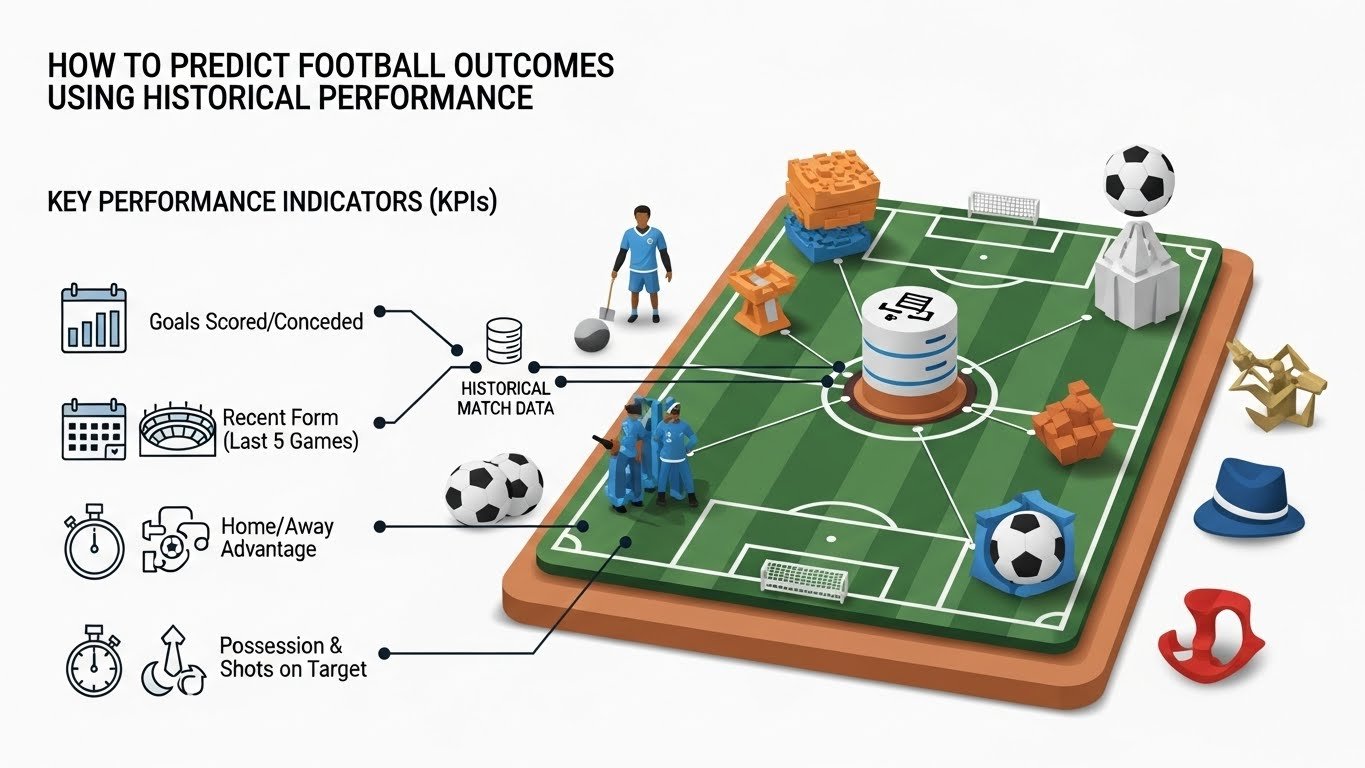
How to Predict Football Outcomes Using Historical Performance
Learn how to predict football outcomes using historical performance. Discover data-driven insights, team trends, and tactical analysis to forecast matches.
Football is more than just passion—it’s a game of patterns, trends, and statistics. While no one can predict the future with absolute certainty, analyzing historical performance allows fans and analysts to make educated forecasts about match outcomes. In this guide, we’ll break down how to use historical data effectively to understand football outcomes and gain deeper insight into team performance, with recent examples from top leagues.
Understanding the Importance of Historical Performance
Historical performance provides a data-driven lens into football. By examining past matches, you can identify:
Teams’ consistency at home and away
Goal-scoring trends
Defensive stability
Impact of player availability and injuries
Tactical strengths and weaknesses
Why It Matters
Teams often follow patterns. For example, Manchester City in the 2023–24 Premier League season maintained an exceptional home record, winning 17 of 19 home games, showing a clear home advantage pattern. By understanding these trends, fans can form a logical expectation of outcomes rather than relying on guesswork.
Key Historical Metrics to Analyze
To predict outcomes effectively, consider these metrics:
Win/Loss/Draw Records
Review the last 5–10 games of each team. Note the proportion of wins, draws, and losses, and pay attention to the context:
Home vs away games
Opponent quality
Match type (league, cup, international)
Example: In the 2024 UEFA Champions League, AC Milan showed a strong streak against mid-tier European teams, winning 6 out of 7 matches. Their historical form suggested a high likelihood of consistent performance in similar matchups.
Goals Scored and Conceded
Analyze:
Average goals scored per game
Average goals conceded per game
Goal differences against strong vs weak teams
Example: During the 2023–24 La Liga season, Real Madrid maintained an average of 2.3 goals per game, while conceding only 0.8. This indicated a strong offensive and defensive balance, which is essential for predicting future scoring trends.
Head-to-Head Records
Historical head-to-head encounters reveal tactical and psychological patterns.
Example: In the 2024 FA Cup, Liverpool had historically dominated Manchester United at Anfield, winning 5 of the last 6 encounters. Even when United was in decent form, Liverpool’s past performance suggested a tactical edge.
Home and Away Form
Home advantage is significant:
Teams perform better at home due to crowd support and familiarity.
Away performance reveals resilience or vulnerability.
Example: In the 2023–24 Bundesliga, Bayern Munich lost only 1 away game all season, showing remarkable consistency even outside their home stadium. Historical away data is crucial to understanding their performance patterns.
Player Availability and Injuries
Key players heavily influence outcomes:
Example: In the 2024 Premier League, Chelsea struggled defensively in matches where their captain Thiago Silva was absent due to injury, conceding 1.8 goals per game compared to 0.9 when he played. Historical performance without key players highlights likely vulnerabilities.
Tactical and Managerial Patterns
Tactics often define outcomes:
Formations and playing styles matter (e.g., pressing vs counter-attacking)
Managers’ past results against certain opponents can indicate expected outcomes
Example: In the 2023–24 Serie A season, Napoli consistently outperformed Lazio at home due to their high-pressing style, which historically disrupts Lazio’s ball circulation.
Building a Historical Performance Model
Once you’ve gathered metrics, you can create a simple performance model:
Step 1: Assign Scores
Rate each factor on a scale of 1–10.
Example Table:
| Factor | Napoli | Lazio |
|---|---|---|
| Home Advantage | 9 | 4 |
| Recent Form | 8 | 6 |
| Head-to-Head | 7 | 5 |
| Key Players | 8 | 6 |
| Tactical Matchup | 7 | 7 |
Step 2: Weight the Factors
Assign weightings:
Home advantage: 25%
Recent form: 25%
Head-to-head: 20%
Key players: 15%
Tactical matchup: 15%
Step 3: Calculate Confidence Scores
Multiply factor scores by their weights. The higher score indicates the team with historically better performance likelihood.
Using Trends to Anticipate Match Flow
Historical data also helps anticipate match dynamics:
Early vs late goals: Teams like Manchester City (2024–25 EPL) tend to score in the first 30 minutes, showing an aggressive start pattern.
Defensive lapses: In Juventus’ 2024 season, most goals conceded occurred after the 70th minute, suggesting late-game fatigue.
Streaks: Winning or losing streaks affect confidence and performance.
Combining Multiple Sources of Data
Historical performance is most reliable when combined with:
Recent form data (last 5–10 games)
Squad rotation and fatigue
Weather and pitch conditions
Competition type (league, cup, international)
Example: During UEFA Euro 2024 qualifiers, teams like Germany displayed consistent historical trends, but squad rotation for midweek games sometimes caused unusual outcomes. Combining data prevents misjudgment.
Common Pitfalls to Avoid
Overvaluing a single past match: One result rarely predicts the next.
Ignoring context: Injuries, suspensions, or tactical shifts matter.
Bias toward favorite teams: Emotional judgment clouds analysis.
Assuming history guarantees outcomes: Trends reduce uncertainty but don’t eliminate it.
Practical Tips for Fans and Analysts
Track your favorite team’s match form using a spreadsheet.
Compare head-to-head records and home/away performance.
Build a confidence score model using the metrics above.
Reassess weekly — football trends evolve rapidly.
Look for patterns over multiple seasons, not just recent matches.
Conclusion
Predicting football outcomes using historical performance is about analysis, logic, and patterns. While certainty is impossible, historical insights provide a structured approach to understanding football matches. By evaluating past performance, identifying trends, and considering context, you can anticipate match outcomes more effectively and gain deeper appreciation for the game.
Remember: This approach is for understanding football, not gambling. Knowledge of team trends, tactical strengths, and performance history empowers fans and analysts to enjoy the sport more intelligently.